Chairholder 2024 – 2026: Professor Shazly Savahl
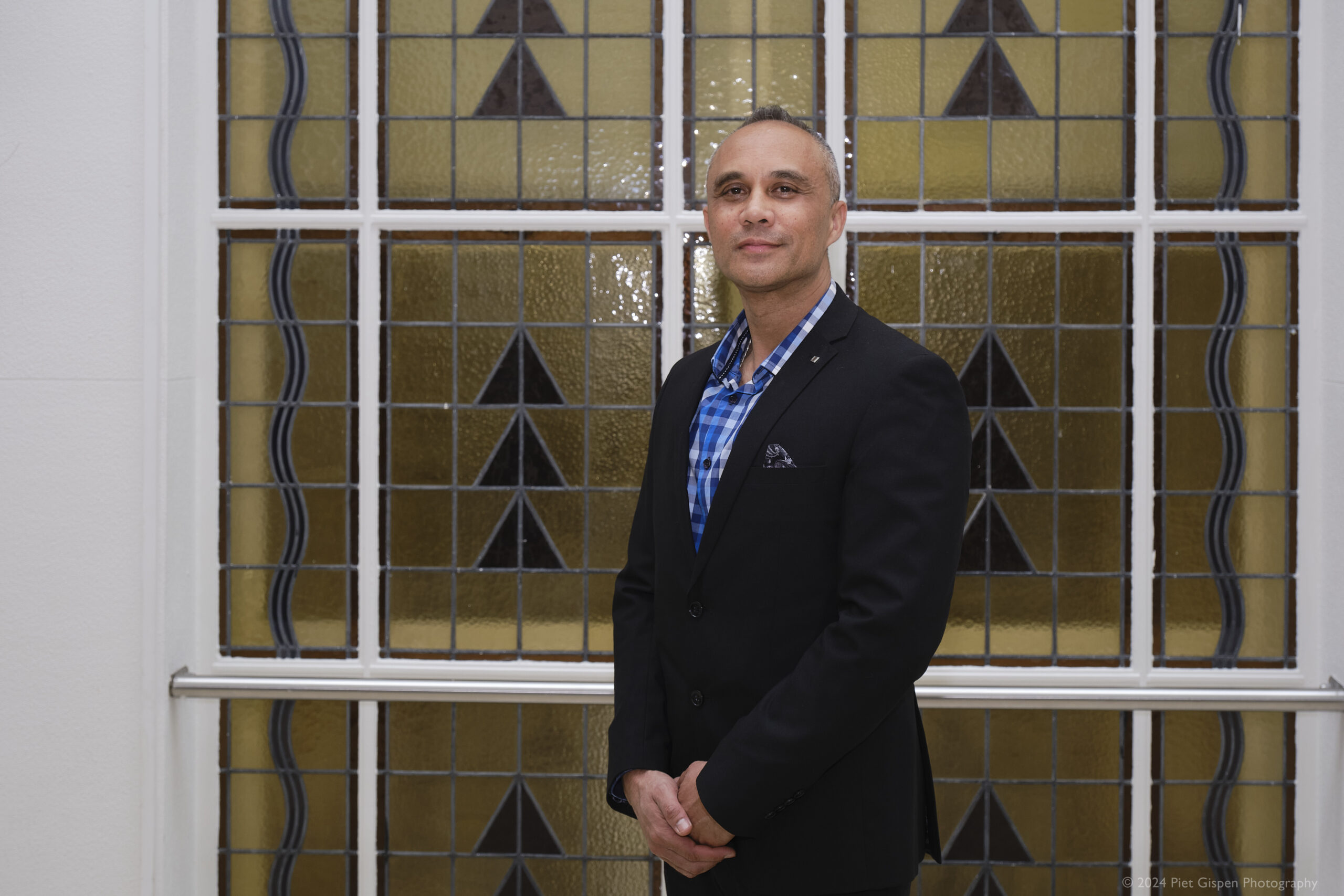
Professor Shazly Savahl appointed to Prince Claus Chair
As of 1 September 2024, Professor Shazly Savahl has formally started the Prince Claus Chair on the well-being of children and young people.
Advance well-being and quality of life research for children and youth through a global social justice lens.
Shazly Savahl is a registered research psychologist and professor at the Department of Psychology at the University of the Western Cape. he is the lead principal investigator of the Children’s Worlds: International Survey on Children’s Well-Being, and the South African Multinational Qualitative Study on Children’s Understanding of Well-Being. He is a founding and current board member of the South African Positive Psychology Association, a member of the National Children’s Rights Intersectoral Coordinating Committee, the International Society for Quality of Life Studies, and an executive board member of the International Society for Child Indicators. He holds a B2 rating
(internationally acclaimed researcher) from the National Research Foundation of South Africa and is a member of the Academy of Science of South Africa.
Maria van der Harst is a postdoctoral researcher at the University Medical Center Utrecht (Netherlands). She was trained in cultural anthropology, but broadened her focus through interdisciplinary collaborations to a well rounded social scientist. Her work bridges fields as diverse as global health, youth studies, children’s well-being & quality of life, social justice, and research ethics. She finished a PhD at UMC Utrecht, titled ‘Leaving No One Behind: normative and empirical explorations in knowledge production for societal change’. She is the postdoc researcher for the 2024-2026 cycle of the Prince Claus Chair for Equity and Development, led by prof. Shazly Savahl. The project is focused on the study of the well-being and quality of life of children and youth. It aims to foreground children’s voices on matters affacting their lives, and strives towards a child-conscious society.
She is passionate about building and strengthening meaningful connections, international initiatives and global engagement, in order to work towards social change on issues that can only be meaningfully addressed at global scale. Building bridges is what she finds exciting; she is active in (and an advocate for) inter- and transdisciplinary, as well as international collaborations.
You can contact her at a.m.r.vanderharst1@uu.nl and connect with her here LinkedIn Profile page.
Adams, S., Savahl, S., Barn, R., Fattore, T., Fegter, S., van der Harst, M., Stoecklin, D., & Casas, F. (2026). Children’s environmental subjective well-being: Considering the intersecting role of nature, inequalities, and community. Current Opinion in Psychology, 67, Article 102200.
About Professor Savahl’s research
Central to Professor Savahl’s approach is his conviction that the well-being of children and young people must be afforded the highest priority. He emphasizes that fostering their physical, emotional, and psychological health is essential for their overall development and success. His research focuses on critical aspects of children’s quality of life, such as health and education, while also striving to enhance their overall life satisfaction and happiness.
“We use subjective data to complement objective quality of life indicators, providing a more comprehensive understanding when developing programs and policies for children and young people”, Professor Savahl explains. This focus on the subjective aspect of well-being is key to his mission, as it promotes genuine participation and elevates the voices of young people.
Reflecting on his vision, he asks, “What do we envision for our children? We want them to have good objective living conditions, but we certainly also want them to be happy with their lives.”
Grounded in a social justice framework, Professor Savahl believes that advancing children’s authentic participation and ensuring that their perspectives on matters affecting their lives is respected, is a moral imperative. “Ultimately, we are striving for a child-conscious society”, he states, underscoring the importance of recognizing and prioritizing the rights and needs of children.
During his tenure, Professor Savahl aims to reshape societal perspectives on investing in young people. “Through our partnership with Utrecht University, we aim to foreground children’s voices through participatory initiatives and harness evidence-based research to develop programs and policies for children and young people,” he asserts. He is also committed to creating opportunities for emerging researchers, and advancing the field of quality of life research.